
Artificial turf is a synthetic grass made from synthetic fibers designed to mimic the appearance and feel of natural grass. It has become increasingly popular in California yards for reasons such as water conservation, easy maintenance, and its environmental benefits. This article will explore the use of artificial turf in California yards, along with its pros and cons.

Firstly, artificial turf is widely used in California primarily due to the scarcity of water resources. California often faces issues of drought and water scarcity. Natural lawns require significant amounts of water to maintain their green and lush appearance, which is a wasteful practice in a region prone to drought. Artificial turf, on the other hand, does not require excessive watering to remain green, thus conserving water resources and reducing household water bills.

Secondly, artificial turf is much easier to maintain compared to natural grass. Natural lawns require regular mowing, watering, fertilizing, and weed control, among other labor-intensive maintenance tasks. Artificial turf, however, only requires periodic cleaning and ensuring the surface is clear, saving a significant amount of time and effort. This makes it a practical choice for busy modern households.
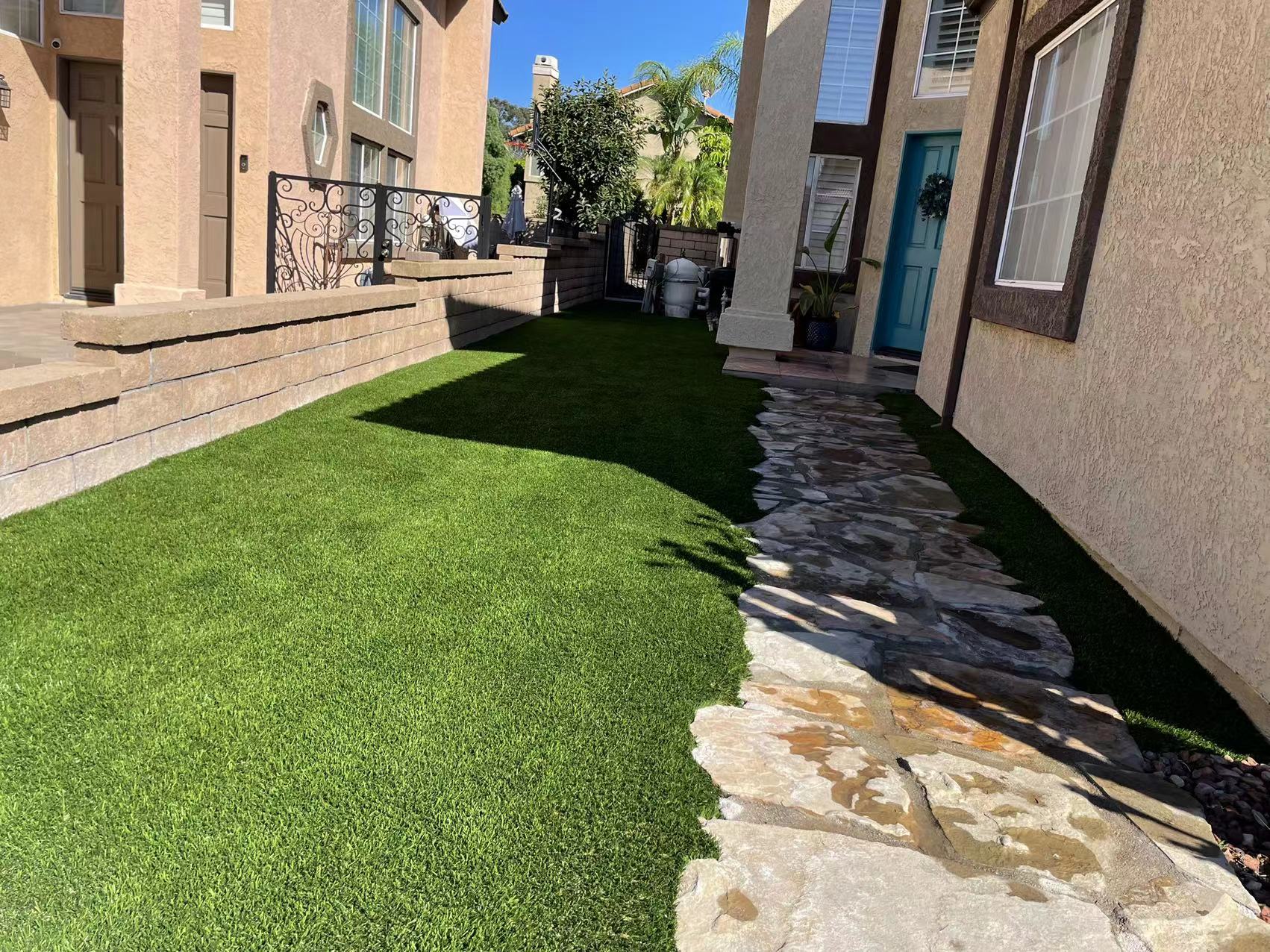
Furthermore, artificial turf is more environmentally friendly. The maintenance of natural lawns often involves the use of chemical fertilizers, herbicides, and pesticides, which can have adverse effects on the environment and soil. Artificial turf eliminates the need for these chemicals, reducing environmental pollution. Additionally, artificial turf does not require frequent mowing, reducing the use of gasoline-powered lawnmowers and decreasing air pollution.
However, artificial turf also comes with some drawbacks. Firstly, the installation and material costs are relatively high. Compared to planting a natural lawn, the installation and material costs of artificial turf can be higher, requiring an initial investment. Secondly, artificial turf may not be as suitable for specific climatic conditions, such as extreme heat, as natural grass. Lastly, while artificial turf looks realistic, it cannot fully replace the natural beauty and ecological value of natural lawns.
In conclusion, the application of artificial turf in California yards offers significant advantages, particularly in terms of water conservation, easy maintenance, and environmental benefits. However, the decision to use artificial turf should be balanced with individual needs, budget constraints, and environmental considerations. This article aims to provide insight and guidance to those considering using artificial turf in California yards.